Is Your Child Falling Behind? The Truth About Youth Strength and Conditioning
Strength and conditioning in youth sport is growing fast
Strength and conditioning in youth sport is growing massively. More clubs, coaches and parents are waking up to what it can do for young athletes, and that's brilliant to see.
The reason is simple. Sport is demanding. Training, matches, tournaments, sometimes a second sport on top. Every time a young athlete jumps and lands in normal play, their body can take roughly five to seven times their body weight. skill coaching teaches them what to do. it doesn't build the Strength to handle that, rep after rep, match after match.
And here's the part I want every parent to hear. Kids who don't build strength and movement skill early are the ones at risk of falling behind. Research shows the muscular strength of school-age children has been declining, and some young athletes' bodies may not be ready for what their sport asks of them. The kids who are prepared are better placed to keep playing and keep improving. The good news is the gap is much easier to close early.
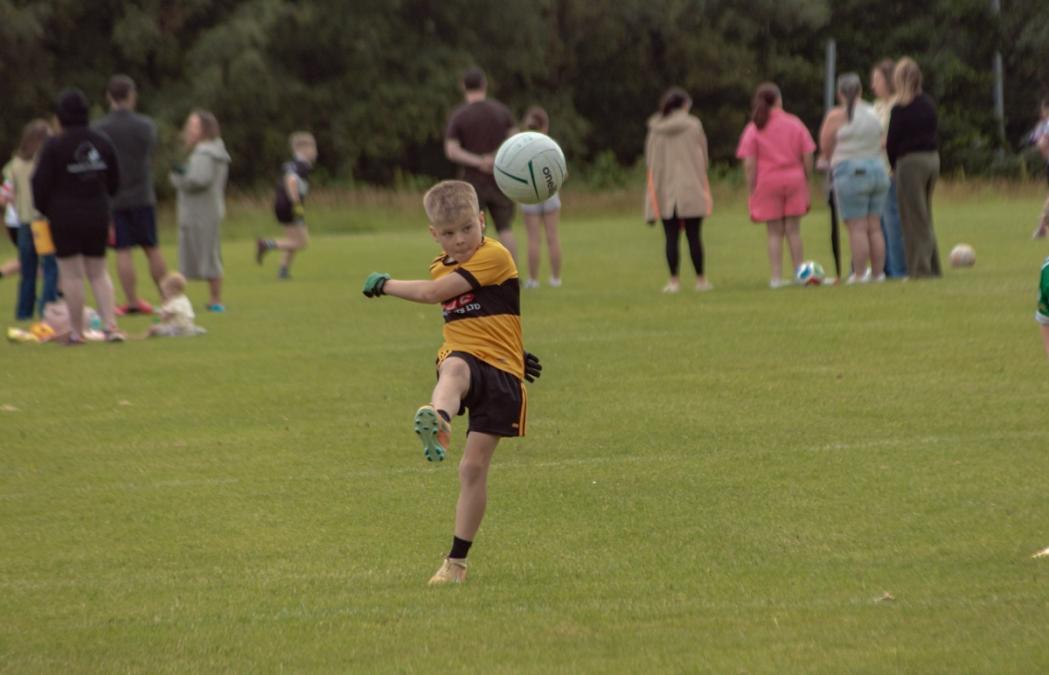
I see this up close with my own son. My 9 year old does a lot of sport. He plays Gaelic football for his clubs and school, hurls for school, and he boxes. I make sure he gets one S&C session a week on top of all that.
I'm a big believer in skill development. Kids need to play, and they need good coaching in their sport. But I believe athletic development alongside it is a big benefit, because skill only gets you so far. Strength, speed and body control are what let a young body do the skill again and again without breaking down.
I'm a qualified strength and conditioning coach, and I've coached S&C with football teams as young as Under 8s. I've also coached the Naomh Éanna U10s for over 3 years. There I'm the team coach, not the S&C coach, though that's about to change. Time is limited, so we start every session with running drills before moving into our fundamental drills. We've seen great improvements from it.
Parents ask me the same questions every time. Is it safe? Are they too young? Will it stunt their growth? This article answers them, using the research, in plain English.
The short version:
- It's coached, age-appropriate physical preparation. Not adult gym sessions, and not heavy lifting.
- The research shows it builds strength, speed and bone density, and can reduce injuries.
- There's no evidence it stunts growth, and children as young as 5 can start with simple movements.
- Playing sport alone doesn't build everything a young body needs.
- Start with a qualified coach and movement skill, not heavy weights.
Sport builds skill. It doesn't build everything.
Sport builds skill, but it doesn't build everything. Here's what the research points to when kids get none of the conditioning side:
- Strength is already falling. Research cited in the 2014 review shows the muscular strength of school-age children has been declining.
- Inactivity raises injury risk. Being inactive is a risk factor for injury in children, and free-time activity has been falling.
- Girls are affected too. In one long-term study, young females who didn't strength train as they matured developed injury risk factors, like knees collapsing inwards on landing. Earlier training appears linked to a lower chance of ACL injury.
- Later-life health. Young people who don't build muscle strength and movement skills early may face a higher risk of health problems later. Missing weight-bearing activity while growing may also affect long-term bone health.
The UK Chief Medical Officers, including Northern Ireland's, recommend that children do a variety of activity across the week to build movement skills, muscle fitness and bone strength. They also note that many UK children aren't meeting the full recommendations.
Playing even more sport isn't the fix. Sport builds skill, but the 2014 review argues physical activity should grow out of general conditioning, not start and end with competitive sport. More of one sport isn't automatically better either. The AAP's 2016 report found that delaying single-sport specialisation until late adolescence (about 15 to 16) lowers the risk of overuse injury and burnout. For most sports, specialising late and trying lots of sports early is most likely to lead to elite level. It also recommends at least one to two days off a week from the main sport, and a month off, three times a year.
For kids already playing a lot, the review suggests strength work should replace some extra sport sessions, not be piled on top.
None of this means a child who has skipped it is behind for good. The gap is real, but it's much easier to close early.
So what is youth strength and conditioning?
It's coached physical preparation for kids and teenagers, matched to their age, maturity and experience. It's not a mini adult gym session. And it's not a ten-year-old under a heavy barbell.
For younger kids it's mostly bodyweight work and games: hopping, jumping, landing, balancing, throwing, running and changing direction. As they get older and their technique is good, we add load in small steps. Bands, medicine balls, light weights, then more.
Strength training for kids is much more than barbells. A major international statement in 2014, backed by the American Academy of Pediatrics, the NSCA and the Faculty of Sport and Exercise Medicine UK, includes bodyweight work, bands, medicine balls, machines and free weights. The AAP agrees. It says children as young as 5 can build strength with simple things like one-legged hops and frog jumps.
Two things decide what a child should do, and neither is a birthday:
- Biological age. Kids the same age can be up to four to five years apart in physical maturity.
- Training age. A 15-year-old who has never trained starts as a beginner. A 10-year-old with good technique shouldn't be held back at the basics.
And it needs a qualified coach. The research is clear that programmes should be designed and supervised by someone who understands children and teenagers, not just adults.
Long-term athletic development (LTAD) in plain English
LTAD is a simple idea. A child's physical development takes years, and what they need changes as they grow. Build the foundations first. Add load and complexity when they're ready. Don't skip steps.
Three ideas do most of the work:
- Foundations first. Movement skill and general strength come before heavy loading or specialising in one sport. A child who can squat, hop, land and balance well has something to build on.
- Follow the child, not the birth year. Kids grow unevenly, and strength and performance don't improve in a straight line around puberty. Training should follow maturity and experience, not just age group.
- Variety and progression. Lots of different activities, with strength work planned in and progressed slowly as technique improves.
One honest point. LTAD has been criticised. The original model used fixed, age-based "windows of opportunity", and a 2011 review by UK researchers questioned the evidence for that. Newer models, like Lloyd and Oliver's Youth Physical Development model, focus on where a child is in their growth, not their age group. The useful idea has held up: coach the child in front of you.
What kids get from it
The 2014 international review describes the evidence for regular, supervised strength training in young people as compelling. Here's what kids get from it:
- Stronger, faster, more powerful. Studies show gains in strength, power, running speed and change of direction. Beginners typically get around 30 to 40% stronger over an 8 to 20 week introductory programme. Before puberty, that comes mostly from the nervous system getting better at using the muscle, not from bigger muscles.
- Stronger bones. Childhood and the teenage years are when bone is built. Programmes that include strength training can improve bone density, and the UK Chief Medical Officers say strengthening activity in childhood helps build healthy bones.
- Fewer injuries. Well-designed programmes may reduce sports injuries, and the 2014 review calls them an essential part of preparing young athletes. Training aimed at known risk factors has the potential to cut overuse injuries by roughly half.
- Healthier body composition. Research links it with less body fat and better insulin sensitivity in overweight teenagers.
- Confidence and wellbeing. The evidence is more limited and mixed here, but it leans positive when the focus stays on enjoyment and getting better.
- A foundation for an active life. Building strength and movement skill early appears to help people stay active later in life.
Five myths I hear all the time
Myth: "It stunts their growth"
The research doesn't back this up. The 2014 review says fears about growth plate injury aren't supported by scientific reports or clinical observation, and no evidence shows strength training harming growth or reducing adult height. The stress on bone may even help it develop.
Myth: "It's too dangerous"
Injuries do happen, but the review says they've generally occurred when kids were unsupervised, badly coached or given the wrong loads. Most can be avoided with good coaching, sensible progression and a safe space. It also notes children have a lower risk of joint sprains and muscle strains from strength training than adults. The AAP says the same: good technique and supervision.
Myth: "They're too young"
There's no fixed minimum age. The review reports clear gains in children as young as 5 to 6 using basic exercises, and the AAP says children of all ages can benefit with supervision. What matters is that the child can follow instructions and has reasonable balance and posture control.
Myth: "It's only for elite or talented kids"
The evidence supports it for all children and teenagers, whatever their size or ability. For overweight children it can improve strength and coordination and build confidence in being active.
Myth: "It'll make them bulky"
Before puberty, strength gains come mainly from the nervous system, not bigger muscles, so the focus is strength, control and movement. In teenagers, especially boys, muscle size does start to increase.
Where to start
The safest approach is simple, and it starts with who's coaching.
- Use a qualified coach. Look for someone with a recognised strength and conditioning qualification who also knows how to coach children. Ask about both.
- Start with movement, not load. Bodyweight squats, lunges, presses and pulls, plus hopping, landing and balance. Add load once technique is solid. For beginners, the review suggests one to two sets at light to moderate loads.
- Two to three short sessions a week. On non-consecutive days. That's the range recommended for building strength in children and teenagers. In season, one to three sessions is enough to maintain gains.
- Keep it year-round. Strength gains drift back towards baseline after 8 to 12 weeks off, so treat it as a long-term habit.
- Get a medical check first if needed. The AAP advises seeing a doctor first if a child has conditions such as uncontrolled high blood pressure, uncontrolled seizure disorders, certain heart conditions or a history of chemotherapy.
Don't let your young athlete fall behind. The foundations they build now are what everything else sits on, and it's much easier to build them early. You can start here: my Youth Strength and Conditioning Foundation Edition covers the principles of long-term athletic development, age-appropriate training, movement quality, and speed and agility. It also includes a home workout so young athletes can start with no equipment.
If you coach a team, or have a young athlete who would benefit from structured sessions, get in touch and we will talk through what suits them.
This article is general information, not medical advice. If your child has a medical condition or an injury, speak to their GP before starting.
Sources
- Lloyd RS, Faigenbaum AD, Stone MH, et al. Position statement on youth resistance training: the 2014 International Consensus. Br J Sports Med 2014;48:498-505
- American Academy of Pediatrics. Guidance on resistance training for children (news release on the 2020 clinical report, Pediatrics)
- Brenner JS, AAP Council on Sports Medicine and Fitness. Sports specialization and intensive training in young athletes. Pediatrics 2016;138(3):e20162148 (summary in Pediatric News)
- UK Chief Medical Officers' physical activity guidelines, updated 10 July 2026
- Lloyd RS, Oliver JL. The Youth Physical Development Model: a new approach to long-term athletic development. Strength Cond J 2012;34(3):61-72
- Ford PA, De Ste Croix MBA, Lloyd RS, et al. The long-term athlete development model: physiological evidence and application. J Sports Sci 2011;29:389-402 (cited in the 2014 consensus statement)

Sean Dwyer
Belfast-based personal trainer and online coach with a BSc (Hons) in Sport, Fitness & Coaching and over 12 years of experience coaching clients in person and online.
More about SeanGET EXPERT COACHING
Want personalised guidance to reach your goals faster? Work with a BSc-qualified coach with over 12 years of experience.
Learn About Coaching