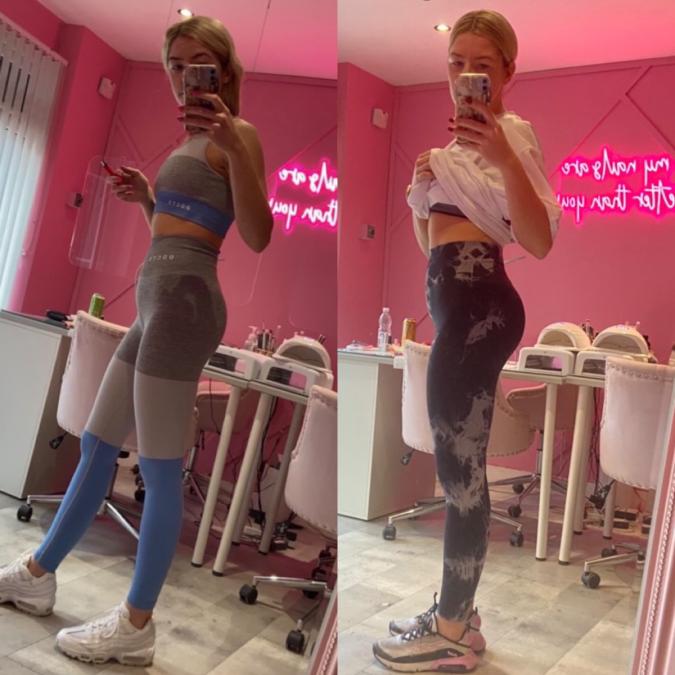
My Top 5 Exercises to Build Glutes, From a Coach Who's Seen What Actually Works
Let me be straight with you from the start.
I have been coaching for over 12 years. I have worked with hundreds of clients, men and women who came to me wanting to build their glutes. And in that time I have seen almost every mistake you can make in this area.
Endless resistance band circuits. Hundreds of bodyweight squats. Lateral walks up and down the gym floor until the cows come home.
And barely a glute in sight.
Here is the thing nobody wants to say out loud. Most people training for glute development are not actually training their glutes. They are doing movements that feel like they are working, that get them sweating, that leave them sore the next day.
But soreness is not the same as progress. A burn is not the same as growth.
So let me tell you what actually works. These are the five exercises I come back to time and time again with every client I coach. They are not the most exciting list you will ever read. But they are the most effective. And after 12 years that is what I care about.
1. The Hip Thrust
If I could only give someone one exercise to build their glutes this would be it. Every single time.
The hip thrust loads the glutes at the top of the movement at full hip extension which is exactly where the glute is most active.
But here is the problem. Most people are not actually doing hip thrusts. They are doing lower back thrusts.
Watch someone hip thrusting in the gym and nine times out of ten you will see their lower back hyperextending at the top, their ribs flaring, and their chin pointing toward the ceiling. That is your lower back working. Not your glutes.
Here is what you need to do instead. Tuck your chin. Ribs down. Drive through your heels. At the top squeeze hard and hold for a full second. Feel the difference? That is your glutes doing the work.
The hip thrust is non-negotiable in any glute programme. Get the technique right and load it progressively across the week. This is where glutes are built.
2. The Squat
Here is where I want to challenge something, because this one has picked up a bad reputation it does not deserve.
Over the last few years the narrative in the glute world has been clear, squats are a quad exercise, hip thrusts build glutes, end of conversation. Social media ran with it. Coaches repeated it. And a generation of people stopped squatting for glute development entirely.
The research does not support that narrative.
Bret Contreras (known as The Glute Guy) one of the most published researchers in this specific area co-authored a study in 2023 published in Frontiers in Physiology that directly compared the back squat and the hip thrust for glute hypertrophy over nine weeks of supervised training. The findings stopped a lot of people in their tracks. Both exercises produced similar gluteal muscle growth. Not a dramatic difference. Not hip thrusts winning by a landslide. Similar.
(Plotkin DL, Rodas MA, Vigotsky AD, McIntosh MC, Breeze E, Ubrik R, Robitzsch C, Agyin-Birikorang A, Mattingly ML, Michel JM, Kontos NJ, Lennon S, Frugé AD, Wilburn CM, Weimar WH, Bashir A, Beyers RJ, Henselmans M, Contreras BM, Roberts MD. Hip thrust and back squat training elicit similar gluteus muscle hypertrophy and transfer similarly to the deadlift. Front Physiol. 2023 Oct 9;14:1279170. doi: 10.3389/fphys.2023.1279170.)
And when Contreras himself was asked about the findings his position was clear the combination of both exercises is likely optimal. The squat provides a loaded stretch position at the bottom that the hip thrust cannot replicate, while the hip thrust provides superior activation at full extension. Together they train the glutes across the full range. Neither replaces the other.
So why did squats get such a bad name for glute building in the first place? Technique and stance. A narrow stance, an upright torso, and a shallow depth will bias the quads. But a wider stance, toes slightly out, sitting into depth, and allowing a natural forward lean of the torso shifts the emphasis significantly toward the glutes and hamstrings.
I use squats with most of my clients I coach for glute development. Done correctly they are one of the most powerful tools you have. Do not ditch the squat. Fix it.
3. The Romanian Deadlift
The RDL makes my top five because of something the hip thrust and squat do not fully deliver, heavy load through a deep stretch position.
Research increasingly shows that training a muscle through its lengthened range under load produces significant hypertrophy stimulus. The RDL puts the glutes and hamstrings under exactly that kind of tension at the bottom of the movement where the stretch is greatest.
Here is how I coach it. Stand tall with a soft bend in the knees. Push your hips back not down. Feel the stretch build through your hamstrings and glutes as the bar travels down your legs. Keep everything close. Drive your hips forward to return to standing.
The glutes are working hard here even when they do not feel like it in the moment. That is the nature of a loaded stretch it does not always produce the burn people are chasing but it absolutely produces results. Trust the movement and hit it consistently across your training week.
4. The 45 Degree Hyperextension
This one is criminally underused and I want to change that.
The 45 degree hyperextension performed on a hyperextension bench, hinging at the hips and driving back up is one of the best posterior chain exercises available. Done correctly it targets the glutes, hamstrings, and lower back in a way that most gym movements simply do not replicate.
The key distinction here is hip hinge not spinal movement. I see people rounding and extending their lower back repeatedly on this machine and calling it a hyperextension. That is a spinal movement. What you want is a genuine hinge at the hips pushing your hips back into the pad on the way down and driving them through forcefully on the way up.
To bias the glutes even further allow your upper back to round slightly and focus on driving your hips into the pad at the top. You will feel your glutes fire in a way they rarely do on other exercises. Add a plate or dumbbell for load once the movement pattern is solid.
This fills a gap that squats, hip thrusts, and RDLs do not train the glutes and hamstrings through a movement that is highly forgiving on the joints and easy to execute with quality. Include it regularly across your training week.
5. The Bulgarian Split Squat
Most people hate this exercise. It is uncomfortable, it requires balance, and the first few times you do it your legs will be shaking.
That is exactly why I love it.
The Bulgarian split squat rear foot elevated, front foot forward, dropping into a single leg squat loads the glutes of the front leg heavily, forces each leg to work independently, and with a slight forward lean of the torso becomes one of the most effective glute exercises in existence.
If you find your quads dominating this movement step your front foot slightly further forward and lean your torso forward as you descend. The glute engagement changes immediately.
The reason this makes my top five is simple it exposes and addresses imbalances between left and right that bilateral exercises mask. Most people have a stronger side. The Bulgarian split squat finds it. Fix that imbalance and you build more symmetrically and reduce injury risk at the same time.
Start with bodyweight until the pattern is solid. Then add load and build consistently across your sessions throughout the week.
A note on how I programme these
I am not a big believer in prescribing a fixed number of sets per exercise and calling it a day. What matters more to me is how these exercises are distributed across your training week, hitting the glutes with enough frequency and enough quality volume to drive consistent adaptation.
In practice that means spreading these movements across multiple sessions rather than hammering them all in one session. Your glutes recover and grow between sessions. Give them the stimulus, give them the recovery, and repeat. That is how frequency drives results far more effectively than one big session once a week.
If you want to know exactly how I structure this, how many times per week, which exercises pair well together, and how to build volume progressively over time that is exactly what the Glute Programme at https://seandwyercoaching.com/programmes/the-glute-programme covers in full.
The thing most people are still missing
I could give you the five best glute exercises in the world (in my opinion however most work when done correctly) and you would still not see the results you want without this.
Progressive overload.
Your glutes need a reason to grow. More weight. More reps. Better quality of movement. Consistently, week after week.
The people I see who never change their glutes are the ones doing the same band circuit they found on Instagram two years ago. The people whose glutes genuinely transform are the ones following a structured programme, tracking their sessions, and doing more than they did last week. Every single week.
That is the system. The exercises are the vehicle. Progressive overload and frequency are the engine.
Where to go from here
The Glute Programme at seandwyercoaching.com covers everything, exercise selection, programming, progression, and nutrition guidance. All of it structured and ready to follow.
And if you have questions about anything in this article drop me a message on Instagram at @seandwyercoaching. I read every one.
Now go and train. 💪
YOU MIGHT ALSO LIKE
Why Your Mindset Is the Only Thing Standing Between You and the Results You Want
Physical goals matter. But without a mindset shift they will never last. Here is the honest truth about growth, bad days, and becoming someone who actually keeps their results.
12 July 2026
Read MoreGET EXPERT COACHING
Want personalised guidance to reach your goals faster? Work with a BSc-qualified coach with over 12 years of experience.
Learn About Coaching